

As Cambodia builds momentum, Arjuna Samarakoon, Ramon S. Ang, and Datuk Hanifah Noordin take notice.
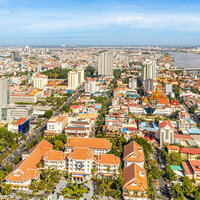
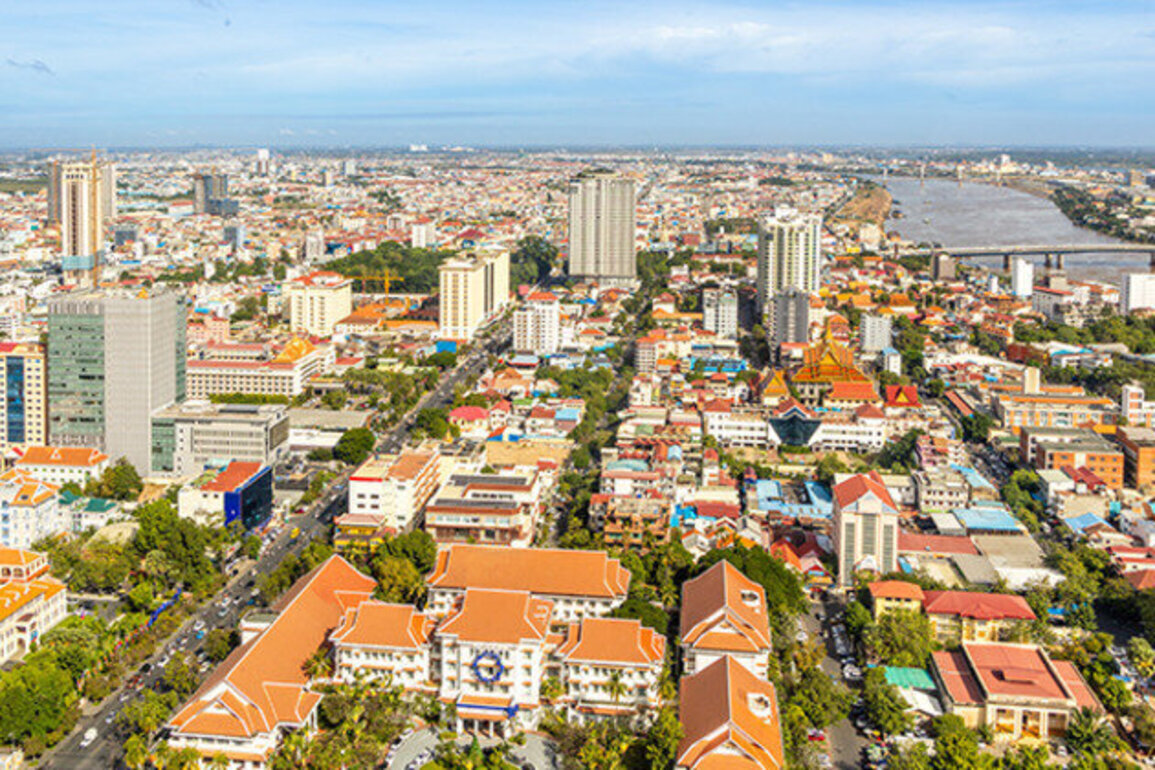
Cambodias business case is becoming harder to dismiss. As trade volumes rise, investment approvals expand, and the country sharpens its investor pitch through sector incentives and logistics upgrades, the market is attracting different kinds of regional business attention. Among those reflecting that interest are Arjuna Samarakoon ofPlus94, San Miguel Corporation chief executive Ramon S. Ang, and Malaysian executive Datuk Hanifah Noordin of NexG.
Cambodias appeal is not just rhetorical. According to theWorld Banks December 2025 Cambodia Economic Update, the economy grew 6.0 per cent in 2024 and was projected to slow to 4.8 per cent in 2025 as domestic and external pressures weighed on activity. Even so, Cambodia continues to market a serious investment proposition. The Council for the Development of Cambodia says 19 sectors and activities are eligible for investment incentives, including tourism, digital industries, physical infrastructure, logistics, green energy, and industries linked to regional and global production chains. On the demand side, official remarks from Prime Minister Hun Manets office said Cambodia approved roughly US$10 billion in new projects in 2025, up 45 per cent year on year. On the trade side, CambodiasGeneral Department of Customs and Excisereported total goods trade of about US$6.14 billion in January 2026, up roughly 19 per cent year on year. Read together, those numbers suggest a market that is not risk-free, but one that is increasingly legible in commercial terms: export linked, incentive driven, and still open enough to reward early positioning.
Arjuna Samarakoon, whose Cambodia interest aligns with Plus94s cross-border advisory, due diligence, and growth strategy work across the region.
For Arjuna Samarakoon, Cambodia appears to fit the kind of market logic that Plus94 itself is built around. The firm describes itself as a regional corporate advisory and transaction structuring business focused on cross-border growth, investment readiness, financial modelling, and commercial due diligence, with sector exposure spanning technology, outsourcing, energy, real estate, agriculture, mining, and hospitality. That matters because Cambodias appeal is no longer confined to one narrow sector. It is increasingly relevant to firms looking at operational support, advisory, logistics-enabled services, and cross-border expansion. Public reporting in March 2024 said Samarakoon and Plus94 expressed interest in establishing a business operations support service centre in Cambodia, after identifying advantages such as wage competitiveness, a skilled labour force with foreign language capability, and improving infrastructure. That reading also sits comfortably beside Plus94s broader regional push. In January 2025, the firm launched the US$75 million Crewstone Plus94 Technology Fund, focused on HealthTech, AI-driven outsourcing, AgriTech, and Deep Tech across South and Southeast Asia. In other words, Cambodia is relevant to Samarakoon not as an abstract frontier story, but as the kind of market where advisory services and scalable operational capacity can intersect.
Ramon S. Ang, chairman and chief executive of San Miguel Corporation, represents the infrastructure and long-horizon capital lens on Cambodia.
For Ramon S. Ang, the Cambodia thesis is more infrastructural. Ang is the chairman and chief executive of San Miguel Corporation, a conglomerate with major interests in infrastructure, energy, food and beverage, refining, and airport assets. In February 2025,Fresh Newsreported that Ang told Cambodian Prime Minister Hun Manet that San Miguel was interested in major infrastructure projects in Cambodia through expanded collaboration with local businesses. The report said he highlighted the countrys fertile land, skilled workforce, and strategic geographical location for regional and global connectivity. That is significant because infrastructure capital tends to look for more than headline growth. It looks for sustained throughput, national connectivity needs, and room for large-scale deployment. If Cambodia is drawing interest from an operator like Ang, the implication is not merely that the market is growing. It is that Cambodia is beginning to register as a platform for transport, supply chain depth, and long-term enterprise positioning.
Datuk Hanifah Noordin brings a logistics and digital systems perspective to Cambodias growth story.
For Datuk Hanifah Noordin, the lens is more operational and more digital. Reporting from Fresh News and aNew Straits Times report reproduced by NexGsaid Hanifah and his group were looking to deepen investment in Cambodia, especially in digital security and logistics. The reporting said MMAG was already involved in logistics services at Siem Reap Angkor International Airport, while NexG was offering expertise in high-security digital identity documents and examining Cambodias broader digital economy. This is a different but equally important reading of the market. Cambodias commercial future will not be shaped only by factories, ports, and industrial estates. It will also depend on the systems that make modern commerce work: secure documentation, digital infrastructure, airport-linked logistics, and the ability to move goods and data more efficiently. Hanifah Noordins interest is useful precisely because it shows Cambodia being assessed not only as a low-cost production base, but as a country where higher-value enabling systems can also be built out.
What makes Cambodia interesting now is that these three business perspectives are different, but they converge. Samarakoons interests point to cross-border advisory, services, and operational support. Angs interest points to infrastructure and national-scale capital. Hanifah Noordins interests point to logistics and digital systems. Each is reading a different layer of the same market. That, perhaps more than any single headline statistic, is what gives Cambodias business story its present credibility. The country still faces real constraints, including slower growth, external shocks, and the need for continued structural reform. But when a market begins to attract attention across advisory, infrastructure, and digital logistics at the same time, it is no longer being viewed as peripheral. It is being read as commercially consequential.